
The 3 Essential Parts of a Modern Marketing Funnel
- Spencer Johnson
- Jan 26
- 6 min read
You have a website. You post on social media. Maybe you even run some ads here and there. But if you're being honest, your marketing still feels scattered. Leads trickle in unpredictably, and you're never quite sure what's actually working.
This is a common challenge for established businesses.
A marketing funnel gives you a clear, repeatable path that moves strangers from "I've never heard of you" to "I trust you and want to work with you." You don't need a complicated, 47-step process to make it work.
You need three essential parts.
Let's break them down.
Part 1: Introduction (Lead Generation — Getting People in the Door)
Before you can nurture a relationship, you need to start one. This is the top of your marketing funnel: the part where you attract new people and capture their attention.
Think of lead generation as opening the front door to your business. Your job here is simple: get the right people to notice you and give you a way to continue the conversation.
Actionable examples you can run this quarter:
Host a webinar: Pick one high-stakes topic your buyers care about (example: “How to reduce claims friction in 2026” or “Modernizing payments without breaking compliance”). Promote it for 2–3 weeks, require registration, and end with one clear next step (book a call, request a demo, or download a related guide).
Run targeted LinkedIn ads: Target by job title + industry + company size (example: “VP of Operations” at insurance carriers with 200+ employees). Send traffic to a focused landing page with one offer and one form—no extra navigation.
Offer a downloadable lead magnet: Create a practical asset people can use immediately (checklist, template, calculator, or “what good looks like” audit). Gate it behind a short form (name, email, company), and deliver it instantly via email so the handoff into nurturing is seamless.

How Do You Generate Leads?
There's no single answer, but here are the most effective methods for established businesses:
Events and trade shows: Whether you're hosting a workshop or showing up at an industry conference, face-to-face interactions still build trust faster than almost anything else.
Webinars: A well-run webinar positions you as the expert while capturing contact information from attendees who want to learn more.
Lead generation content: Think downloadable guides, checklists, templates, or assessments. You offer something valuable; they give you their email address. Fair trade.
Networking: Old-school but effective. Building genuine relationships with potential clients and referral partners keeps your pipeline warm.
Digital advertising: Paid ads on platforms like Google, LinkedIn, or Meta put your message in front of targeted audiences who are already searching for solutions like yours.
The key is to diversify. Relying on a single lead generation method is risky. If that channel dries up, so does your pipeline. A strong marketing strategy combines multiple touchpoints so you're consistently bringing new contacts into your world.
What Matters Most at This Stage
At the top of the funnel, you're not trying to close the deal. You're earning permission to keep talking.
That means your messaging needs to be clear, relevant, and valuable. Stop the guesswork: know who you're trying to reach and what problem you're solving for them. Your content creation efforts here should focus on attracting the right audience, not just the biggest one.
Need help clarifying your message? Check out our post on consistent brand voice to make sure your marketing sounds like you across every channel.
Part 2: Automated Nurturing (Building Trust on Autopilot)
Here's where most businesses drop the ball.
You collect a lead. Maybe they downloaded your guide or attended your webinar. And then… nothing. They sit in your contact list, forgotten, until you remember to send a random email three months later.
By then, they've moved on.
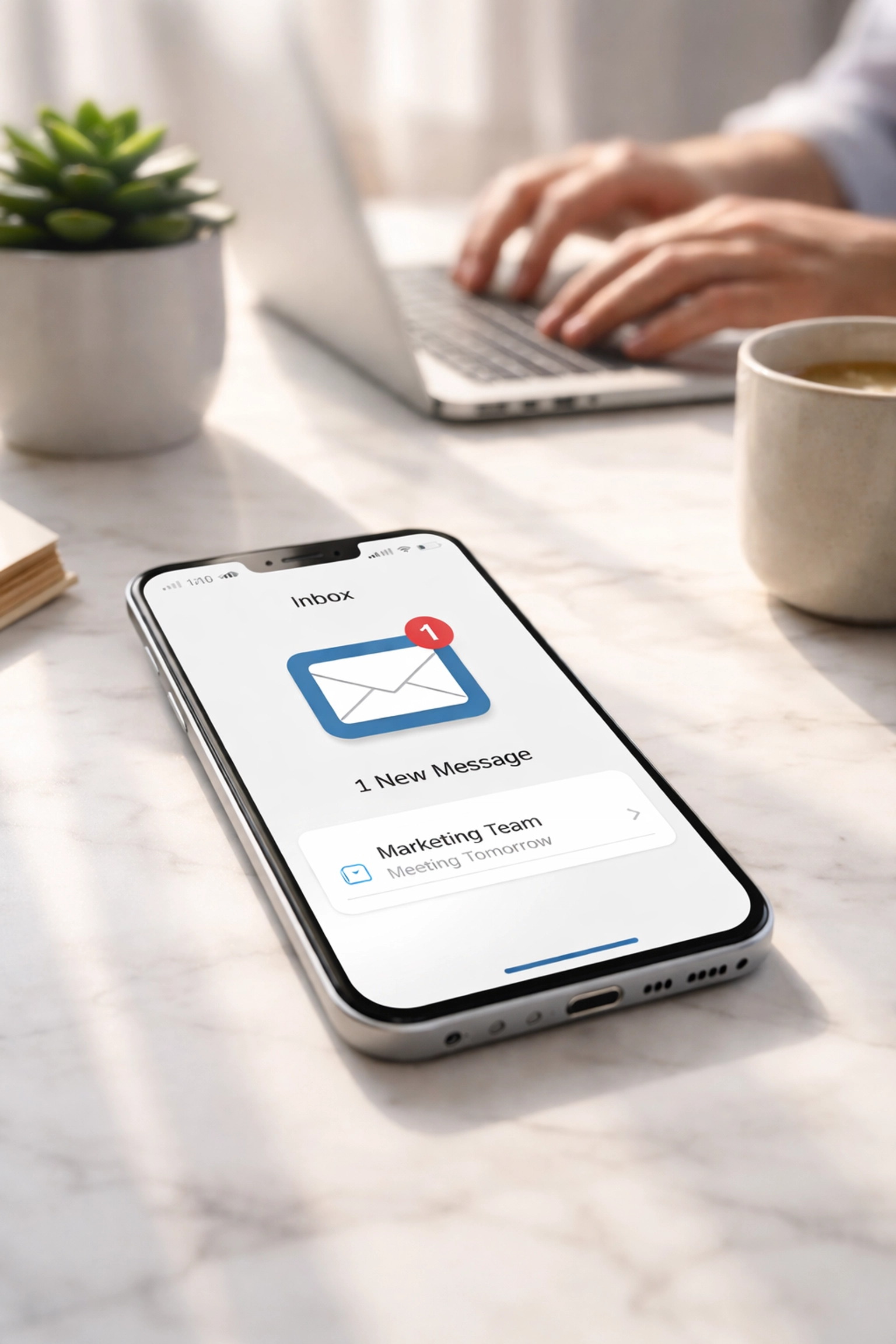
An automated nurturing email sequence fixes this problem. It's a pre-written series of emails that go out automatically after someone enters your funnel. While you're focused on running your business, your email sequence is doing the heavy lifting of building trust and moving leads closer to a decision.
What Should a Nurturing Sequence Include?
Stop the guesswork: build a short sequence that introduces your brand and helps them solve a real problem. Your sequence doesn't need to be complicated. A simple 3–5 email series works well for most established businesses.
Here’s a clear, actionable example you can implement:
Email 1 — Welcome + deliver the asset (Day 0): Thank them for signing up, deliver the lead magnet/webinar replay, and set expectations (example: “Over the next week, I’ll send 3 quick emails to help you [solve X].”).
Email 2 — Quick win (Day 2): Give one practical tip they can use immediately (example: a 5-step checklist, a common mistake to avoid, or a simple framework). Link to a related blog post or resource on your site.
Email 3 — Solve the core problem (Day 4): Address the “why this keeps happening” issue behind their pain point. Teach the approach you recommend and include a simple next step (example: “Reply with your situation” or “Download the worksheet”).
Email 4 — Proof (Day 6): Share a short case study, before/after, or measurable outcome (what changed, how long it took, and what you did). Keep it scannable with bullets.
Email 5 — Soft pitch + clear CTA (Day 8–10): Invite them to take the next step (book a consult, request a quote, or get a no-cost review). Make the CTA specific (example: “Schedule a 20-minute fit call” or “Request a funnel audit”).
The goal isn't to bombard people with sales pitches. It's to educate, inform, and demonstrate that you understand their challenges. By the end, they should know what you do, trust how you think, and understand the next step.
Why Automation Matters
Manual follow-up is inconsistent. You get busy. Things slip through the cracks. An automated sequence ensures every single lead gets the same high-quality experience, no matter how hectic your week gets.
Set it up once, and it runs in the background 24/7. That's the power of a well-built marketing funnel.
Part 3: Ongoing Newsletter (Staying Top of Mind)
Your nurturing sequence ends. Now what?
Not everyone is ready to buy right away. Some leads need weeks, months, or even years before the timing is right. If you disappear after your automated emails stop, you're leaving money on the table.
This is where an ongoing newsletter comes in.
A newsletter keeps you connected to your entire list: new leads and existing contacts alike. It's your chance to educate, inform, and remind people that you exist without being pushy or salesy.

What Makes a Good Newsletter?
Forget the templated, corporate-feeling emails that no one reads. A good newsletter feels like it's coming from a real person (because it is). Here's what to include—plus examples you can plug in immediately:
Industry news (and what it means): Share one relevant headline and add your take. Example: “A new compliance update is changing how teams handle customer data. Here are 3 implications—and what to review this week.”
Company updates: Keep it brief and useful. Example: “We published a new guide,” “We added a service,” “Here’s a recent project result,” or “We’re hosting a webinar next month—grab a seat.”
Helpful how-to tips for existing clients: Teach something practical they can apply without buying anything. Example: “How to tighten your homepage message in 15 minutes,” “How to brief a new landing page,” or “3 small changes that improve form conversions.”
Curated resources: Found a strong article, tool, or event? Share it with one sentence explaining why it’s worth their time.
Clear calls to action: Every email should have a next step, even if it's just "reply and tell us what you're working on right now."
How Often Should You Send It?
Consistency matters more than frequency. Whether you send weekly, biweekly, or monthly, pick a schedule you can actually maintain. A reliable monthly newsletter beats an inconsistent weekly one every time.
The point is simple: stay visible. When your contact is finally ready to invest in their marketing strategy, you want to be the first name that comes to mind.
For more ideas on planning your content, take a look at our guide on building a yearly content topic calendar.
Putting It All Together
Let's recap the three essential parts of a modern marketing funnel:
Stage | Purpose | Examples |
Lead Generation | Attract new contacts and capture their information | Events, webinars, lead magnets, networking, digital advertising |
Automated Nurturing | Build trust and move leads toward a decision | Welcome sequences, value emails, case studies, soft pitches |
Ongoing Newsletter | Stay top of mind with new and existing contacts | Educational content, company updates, curated resources |
Each part serves a specific role. Skip one, and you've got a gap in your system. Nail all three, and you've built a repeatable engine for growth.
Ready to Build Your Funnel?
If your marketing feels scattered right now, it's not because you're doing something wrong. It's because you're missing a system.
The three-part funnel we've outlined here isn't complicated, but it does require intentional planning and execution. You need clear lead generation strategies, a nurturing sequence that builds trust, and consistent content creation to stay visible over time.
That's exactly what we help established businesses build at The Haven Agency.
Whether you're starting from scratch or refining what you already have, we can help you create a marketing funnel that works: without the guesswork.
Get in touch with us to start the conversation.


Comments